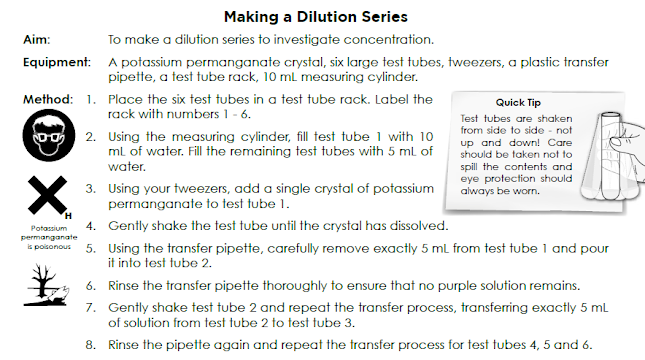
Hello everybody, this chemistry we are experimenting with Serial Dilution. The picture below is the aim and the instruction about our experiment.
- Which was most dilute? least concentrated
- How do you know it's more Dilute and Concentrated? Explain?
I am a student at in Uru Mānuka. In 2020 I was a year 9 and in 2021 I will be a year 10. This is a place where I will be able to share my learning with you. Please note....some work won't be edited - just my first drafts, so there may be some surface errors. I would love your feedback, comments, thoughts and ideas.
Hello everybody, this chemistry we are experimenting with Serial Dilution. The picture below is the aim and the instruction about our experiment.
Hello everyone, this week we are working on our presentation about the scary myth about our own culture. I had a lot of fun making the short film because my teammates Janel and Shiela made it fun while filming. It was a bit stressful to edit because I don't really know what I would put fo the caption. If we had more time editing it, I would make some changes to the voice-over because it didn't really explain about the lady in white. Here is the video I made with my teammates and I hope you like it.
Hello everyone, this textile we have been working on the bag we are making. I haven't started sewing my bag yet but sooner I will, I only have cut the stakeholder one bag and I'm still working on what would stakeholder would have.
Stakeholder 2 should have looked like this, but we don't have any materials that are pink and blue.
Hello everyone, Today we are doing a filter experiment. We have a filter paper to filter the chemical we are experimenting, and no we can't drink it because we don't know if it's clean. At first, we have to put the blue transparent liquid and the name is copper sulfate. We add the transparent chemical which is sodium carbonate. when we stirred it looks like a blue opaque liquid.
Aim: To Separate a solution from a precipitate (precipitate is the name for a solid that forms in a liquid during a chemical reaction).
Hypothesis: what do you think will happen...
I think that the dirty things to the chemical will stay at the filter paper and the bottom will be clear.
Method:
1. Pour approximately 50mL of copper sulfate solution into a beaker.
2. Add the same volume of sodium carbonate solution. A reaction will happen, you should see a cloudy blue precipitate form. Called copper carbonate.
3. Watch demo then fold filter paper to fit inside the funnel
4. Place the funnel with the filter paper inside of it, into the mouth of a conical flask.
5. Stir the mixture in the beaker, then carefully pour it into the funnel.
6. Observe what happened.
Equipment:
Sodium carbonate
Copper sulfate
Conical flask
Stirring Rod
200mL Beaker
Funnel
Filter paper
Hello everyone, today we are researching about Niuean and Tokelau language week, we have to know some simple phrases like a good morning, I didn't finish Tokelau so I have to do it next week, today I will show the slide I made for Niuean.
Hello everybody, so today we are learning about Mixing and dissolving, we have to find how who move faster in what temperature.
What are the ideas from today? The idea for today is to mix and dissolve or to know what temperature to dissolve the sugar first.
What factors effect dissolving?
Experiment: Aim, method, result
Aim: Rate of dissolving depending on temperature and stirring.
Method: In this experiment, we have to have 2 beakers one is small and one is big. We also need a spatula to put the sugar in the water and also for mixing. The first one we did was to put the big beaker cold water and this has to be in 50ml, We have to stir it, We also have to time it the same as we put the sugar and stop when the sugar has dissolved. The second one is the same thing but we have to put hot water, it also has to have the same water as the first one and the amount of sugar we put. The third one is the first one but we can't stir it. The fourth one is the same as the second one but we also don't need to stir it.
Total and average time: Coldwater + mixed= (total) 490sec (average) 70sec | Hot water + mixed=(total) 213sec (average) 27sec | Coldwater + No stirring=(total) 622sec (average) 24.4sec | Hot water + No stirring= (total) 590sec (average) 98sec
Why the result happened?
The hot water gives more energy to the particle and moves around more and the cold water make it slower and that's why the cold water is taking a long time to dissolve.